
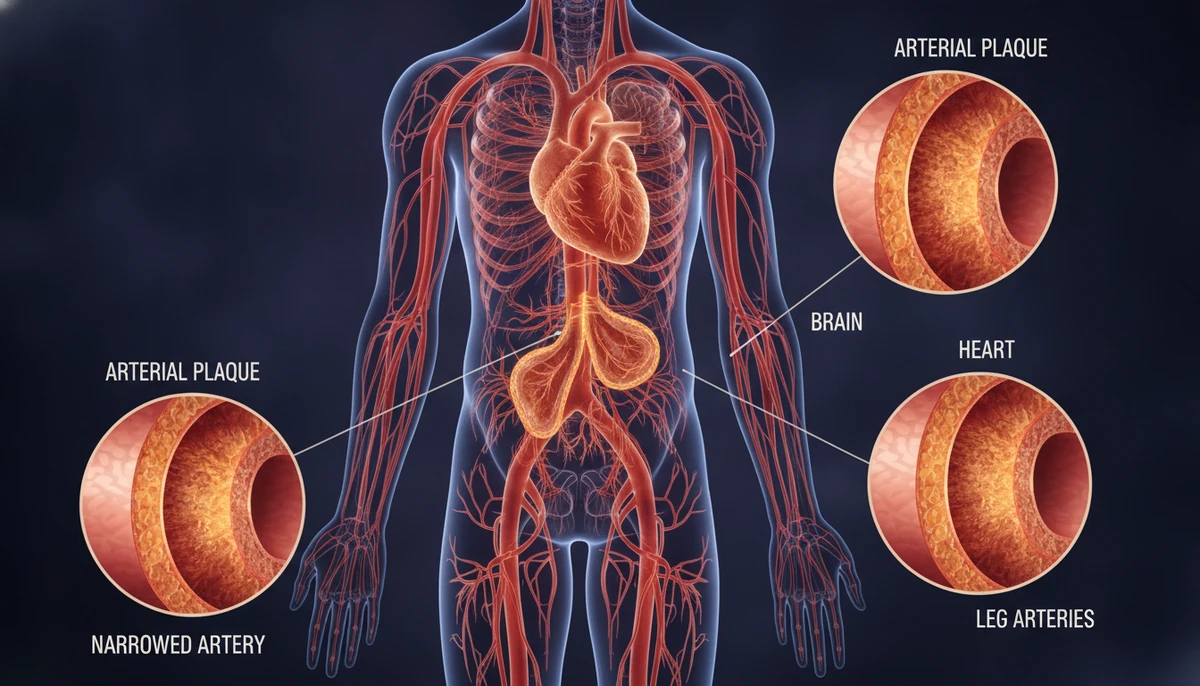
Peripheral Arterial Disease (PAD) is often thought of as a condition that only affects the legs. While leg pain, reduced mobility, and slow-healing wounds are common symptoms, PAD is actually much more than a circulation problem in the lower extremities. It is a form of atherosclerosis, a condition that affects arteries throughout the body.
Because PAD is closely linked to overall cardiovascular health, it can also be associated with an increased risk of heart attack and stroke. Understanding this connection can help patients take steps to protect not only their legs, but their long-term health as well.
What Is Peripheral Arterial Disease?
Peripheral Arterial Disease develops when plaque, made up of cholesterol, fat, calcium, and other substances, builds up inside the arteries. Over time, this buildup narrows the arteries, making it more difficult for oxygen-rich blood to reach the muscles and tissues.
PAD most commonly affects the arteries in the legs, which is why many patients experience symptoms such as:
- Leg pain or cramping while walking (claudication)
- Fatigue or heaviness in the legs
- Cold feet or lower legs
- Slow-healing wounds
- Changes in skin color or texture
While these symptoms often occur in the legs, the underlying process that causes PAD can also affect arteries in other parts of the body.
PAD Is a Sign of Widespread Atherosclerosis
One of the most important things to understand about PAD is that it is rarely an isolated condition.
If plaque has developed in the arteries supplying the legs, there is a greater chance that similar plaque buildup may also be present in arteries supplying the heart or brain. This is why healthcare providers often view PAD as an indicator of broader cardiovascular disease.
Rather than thinking of PAD as “a leg problem,” it’s helpful to think of it as a condition that reflects the overall health of your arteries.
How PAD Is Connected to Heart Attack Risk
A heart attack occurs when blood flow to part of the heart muscle becomes blocked, usually because plaque has narrowed a coronary artery or a clot has developed. Although PAD itself does not directly cause a heart attack, the same process that narrows the arteries in the legs can also affect the arteries that supply the heart.
People living with PAD are more likely to have coronary artery disease because both conditions share many of the same underlying causes, including:
- High cholesterol
- High blood pressure
- Smoking
- Diabetes
- Obesity
- Physical inactivity
Managing these risk factors can support healthier circulation throughout the body.
Understanding the Link Between PAD and Stroke
A stroke occurs when blood flow to part of the brain is interrupted. As with heart disease, the same atherosclerotic process that contributes to PAD may also affect arteries leading to the brain. Plaque buildup can reduce blood flow or increase the likelihood of a blockage.
This is why individuals diagnosed with PAD are often encouraged to take a comprehensive approach to vascular health rather than focusing only on symptoms in the legs.
Why Early Diagnosis Matters
One of the challenges with PAD is that many people assume their symptoms are simply part of getting older.
Leg fatigue may be blamed on aging. Walking more slowly may be attributed to arthritis. Foot discomfort may seem like a normal part of daily life.
Because symptoms often develop gradually, PAD sometimes goes undiagnosed until circulation has become more significantly affected. Recognizing symptoms early allows patients and their healthcare providers to begin managing the condition before it progresses further.
Common Risk Factors Shared by PAD, Heart Disease, and Stroke
PAD, heart disease, and stroke have many of the same risk factors.
These include:
- Smoking or tobacco use
- Diabetes
- High blood pressure
- High cholesterol
- Family history of cardiovascular disease
- Obesity
- Sedentary lifestyle
- Increasing age
Having one or more of these risk factors does not necessarily mean you will develop PAD, but it may increase the importance of routine medical evaluations and preventive care.
How Managing PAD Supports Overall Vascular Health
Although PAD is a chronic condition, there are many ways to help manage it and support healthy circulation.
Treatment plans often include a combination of:
Lifestyle Changes
Healthy lifestyle habits remain an important part of vascular care.
These may include:
- Walking or participating in physician-approved exercise programs
- Eating a heart-healthy diet
- Quitting smoking
- Maintaining healthy blood pressure and cholesterol levels
- Managing diabetes
Even small improvements in these areas can have a positive impact on vascular health over time.
Medication
Depending on your individual needs, your physician may recommend medications to help manage cholesterol, blood pressure, blood sugar, or blood clotting.
These medications are often part of a broader plan to support healthy circulation throughout the body.
Minimally Invasive Procedures
For patients whose symptoms continue despite conservative care, minimally invasive vascular procedures may help improve blood flow.
Treatments such as:
- Atherectomy
- Angioplasty
- Stenting
can restore circulation to the legs without requiring major surgery. Your vascular specialist can determine whether one of these procedures may be appropriate based on your symptoms and diagnostic imaging.
Recognizing Symptoms Beyond the Legs
Because PAD reflects overall vascular health, it’s important to pay attention to changes throughout the body.
While leg symptoms should never be ignored, patients should also discuss concerns such as:
- Chest discomfort
- Shortness of breath
- Sudden weakness or numbness
- Difficulty speaking
- Changes in vision
These symptoms may have many possible causes, but prompt medical evaluation is always important.
The Importance of Routine Vascular Evaluations
Many people with PAD benefit from regular follow-up appointments to monitor circulation and evaluate changes over time.
A vascular evaluation may include:
Physical Examination
Your physician will discuss your symptoms, review your medical history, and evaluate circulation.
Ankle-Brachial Index (ABI)
This simple, non-invasive test compares blood pressure in the arms and ankles to help identify reduced blood flow.
Duplex Ultrasound
Ultrasound imaging allows physicians to visualize blood flow through the arteries and identify areas of narrowing.
These diagnostic tools provide valuable information that helps guide personalized treatment recommendations.
Protecting Your Heart, Brain, and Circulation
Although PAD is commonly associated with the legs, its impact reaches far beyond lower-extremity circulation. Because it shares the same underlying causes as many forms of cardiovascular disease, managing PAD is also an opportunity to support the health of your entire circulatory system.
The good news is that many risk factors can be addressed through a combination of healthy lifestyle choices, routine medical care, and personalized treatment when needed. Early diagnosis allows patients to take a proactive approach before symptoms become more limiting.
Comprehensive Vascular Care at Pedes Vascular Institute
At Pedes Vascular Institute, we understand that vascular health is connected throughout the body. Our team provides comprehensive evaluations for Peripheral Arterial Disease (PAD) and develops personalized treatment plans designed to improve circulation while supporting your overall cardiovascular health.
Using advanced diagnostic imaging and minimally invasive vascular procedures when appropriate, we focus on helping patients maintain mobility, improve blood flow, and better understand their vascular health.
If you’re experiencing leg pain while walking, slow-healing wounds, or other symptoms of reduced circulation, scheduling a vascular evaluation can be an important first step. Our team is here to answer your questions, explain your options, and help you make informed decisions about your care.